


Many organisations mistake exposure to future-oriented information for future readiness.
They commission trend reports, develop strategy papers and fill slide decks with sophisticated analyses. Others avoid structured foresight altogether, viewing it as too time-consuming, too abstract or too distant from practical impact.
In both cases, the bottleneck is rarely the availability of information. It is a matter of connectivity.
Insights often remain trapped in static presentations or confined to small strategy teams, failing to reach the operational levels where daily decisions are made.
Foresight is frequently thought through, but rarely experienced.
To bridge this gap,the FutureSlam approach combines participatory scenario work, AI-supported reflection and improvisational performance. Its goal is to experience foresight as a shared organisational practice.
Foresight is frequently thought through, but rarely experienced.
From expert silos to collective exploration
Traditionally, foresight has been the domain of experts. Small teams analyse trends and deliver strategic options, while the rest of the organisation remains a passive audience.
FutureSlam reverses this logic.
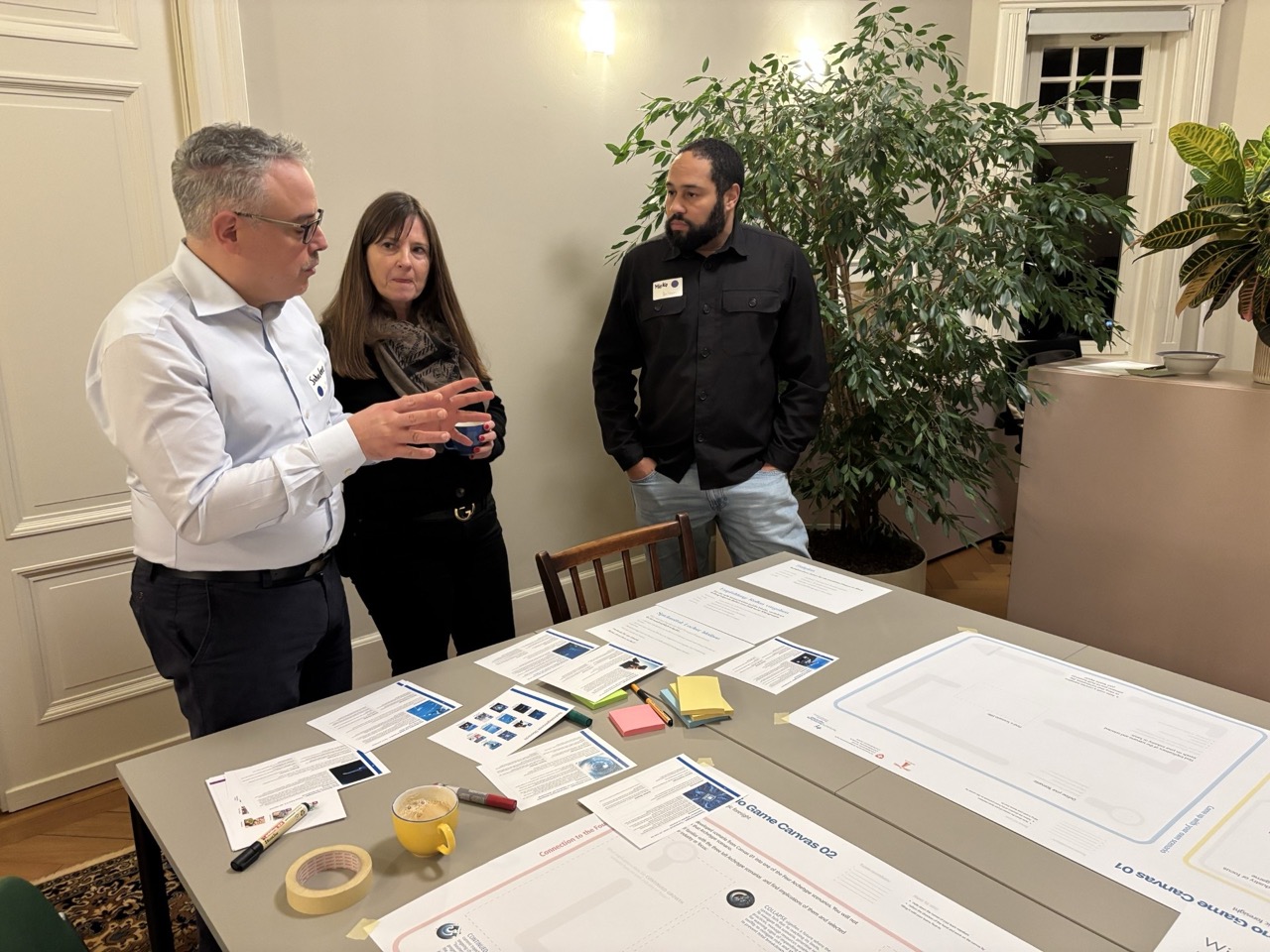
The format is built on the principle that foresight becomes more effective when it is inclusive, structured and memorable. It builds on the Scenario Game developed by the Bavarian Foresight-Institute at the Technical University Ingolstadt in collaboration with armasuisse, turning participants into co-creators rather than consumers of future images.
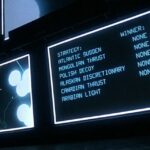
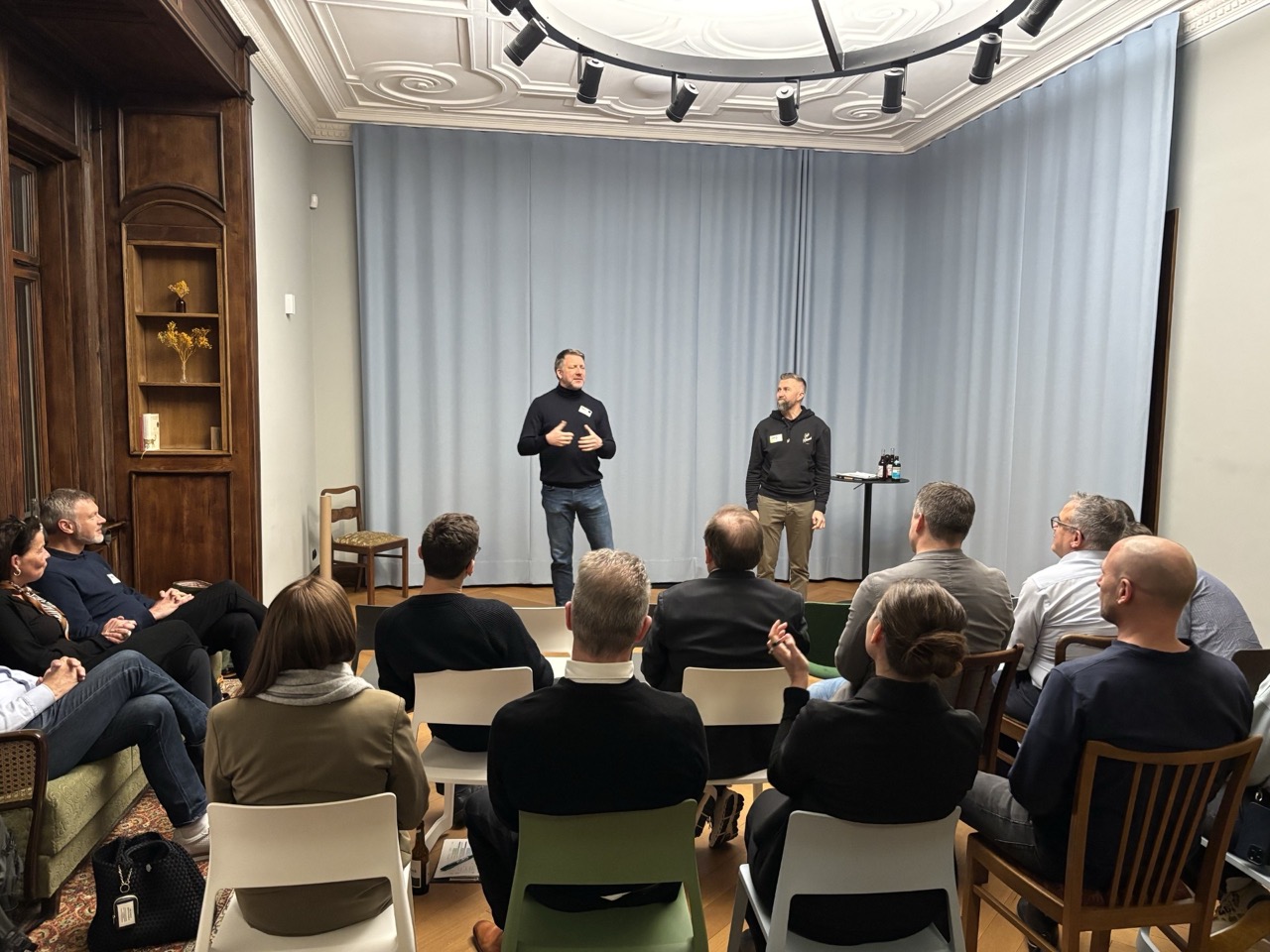
Instead of reading a report, 90 minutes later, participants experience a future as a simulated news broadcast.
They do not simply consume a future image; they step into it.
When human imagination meets AI
A distinctive feature of this approach is the integration of artificial intelligence, not as a replacement for human judgement, but as a complement, impulse generator and sparring partner.
The sequence is critical.
First, groups develop scenarios independently. Then, an AI agent generates its own images of the future based on the same trends.
Because both start from the same trend material, the comparison becomes immediately tangible.
Participants often find that AI confirms parts of their logic, which can build trust in the process. Yet the AI could introduce disruptive or uncomfortable perspectives that human groups may avoid. This friction between logics is where much of the learning occurs. The AI irritates, confirms and extends the horizon of what is considered possible.
Turning scenarios into lived experience
FutureSlam then moves beyond desk-based analysis. It brings the future onto the stage through improvisational theatre.
By translating abstract scenarios into situated scenes, spontaneous, condensed and often humorous, a third form – artistic intelligence – enters the room.
When a future development acquires a face, a voice and a human conflict, it ceases to be a slide in a deck. It becomes a memory. The scene remains where the slide might not.
a third form of intelligence is emerging: artistic intelligence
Why it works: participation, structure, experience
The effectiveness of FutureSlam rests on three principles.
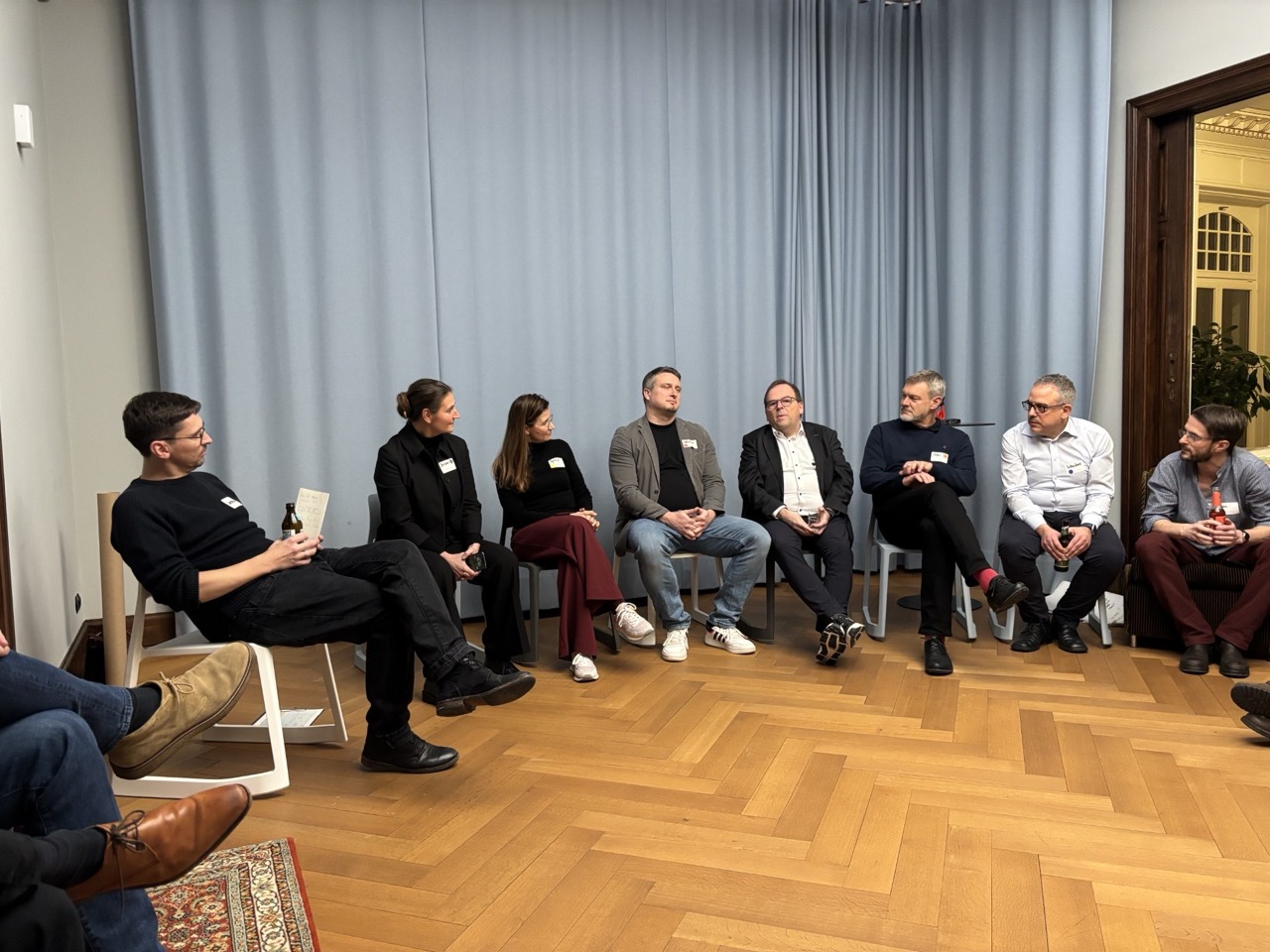
- Participation: Direct involvement creates identification, making subsequent translation into practice more likely.
- Structure: The process remains open in its thinking, but precise in its procedure, making it applicable to organisational contexts.
- Experience: Improvisational performance and AI-supported reflection turn abstract scenarios into memorable situations. Participants do not only understand possible futures intellectually; they feel their implications.
More than a one-off event
FutureSlam is designed to create effects beyond the event itself. Participants report gaining new perspectives on their own work environment, a better understanding of foresight methods and concrete ideas they can take back into practice.
In corporate settings, this follow-up communication is immensely relevant. Scenarios developed during the workshop can be translated into illustrated future press releases, AI-generated videos and podcasts, keeping them alive in internal innovation communication.
The broader context: navigating a world in flux
As organisations face technological leaps, geopolitical shifts and deeper societal transformations, linear planning has reached its limits. The task is not to eliminate uncertainty, but to make it productive.
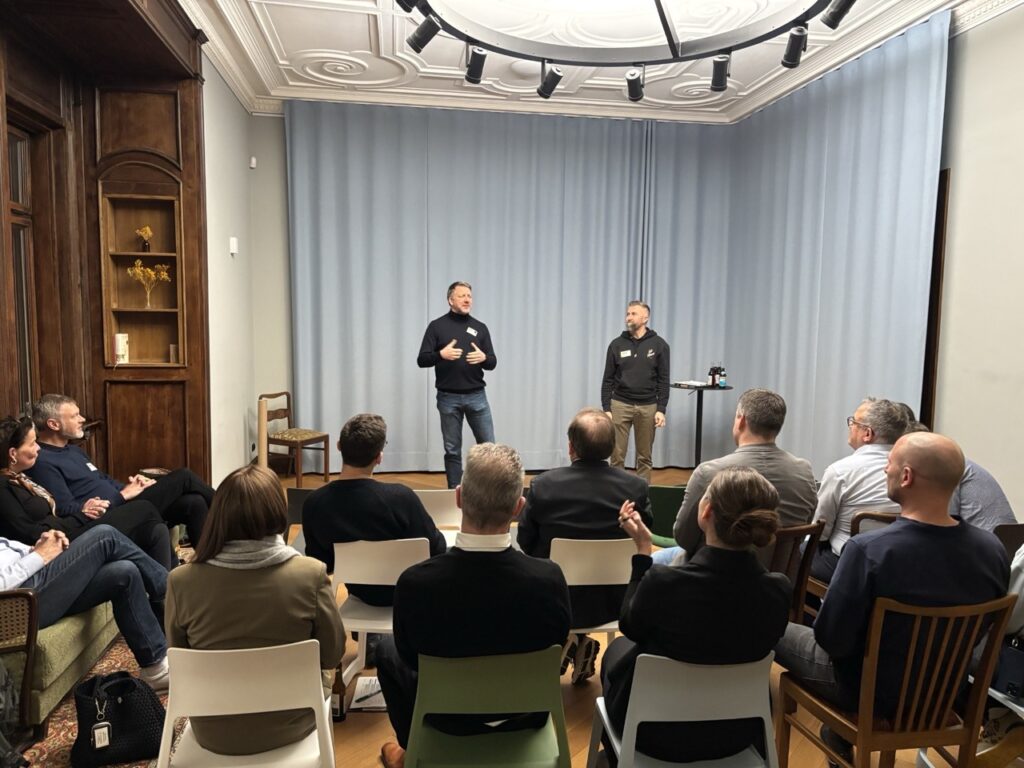
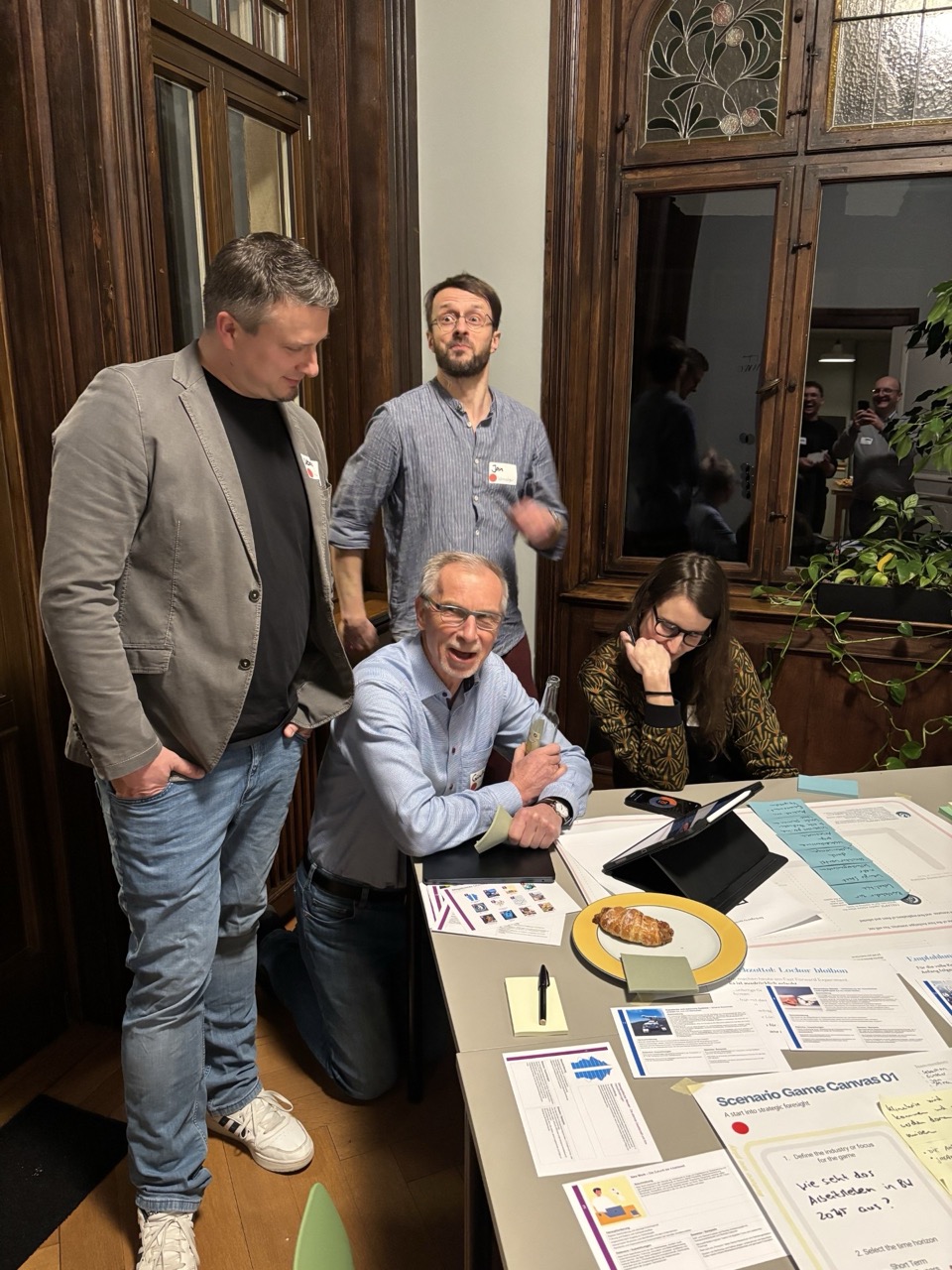
At the end of January, a FutureSlam event in Stuttgart, Germany, brought together around 30 participants from industry and civil society to test the method and experience possible futures collectively. The format suggests that when the future is approached as a space for agency rather than only as a risk, participants can change how they relate to uncertainty.
Foresight rarely fails because of a lack of analysis; it fails when it remains abstract. By making the future tangible, organisations do not simply ask what might happen. They build the collective capacity to imagine, discuss and shape what could come next in ways that resonate beyond the workshop room.
Foresight rarely fails due to a lack of analysis; it fails when it remains abstract.
Et vous, qu’en pensez-vous ?
N’hésitez pas à :
1. partager votre avis ?
2. nous laisser un petit mot ?
3. rédiger un billet ?