

We read the world wrong and say that it deceives us.
Rabindranath Tagore, Stray Birds
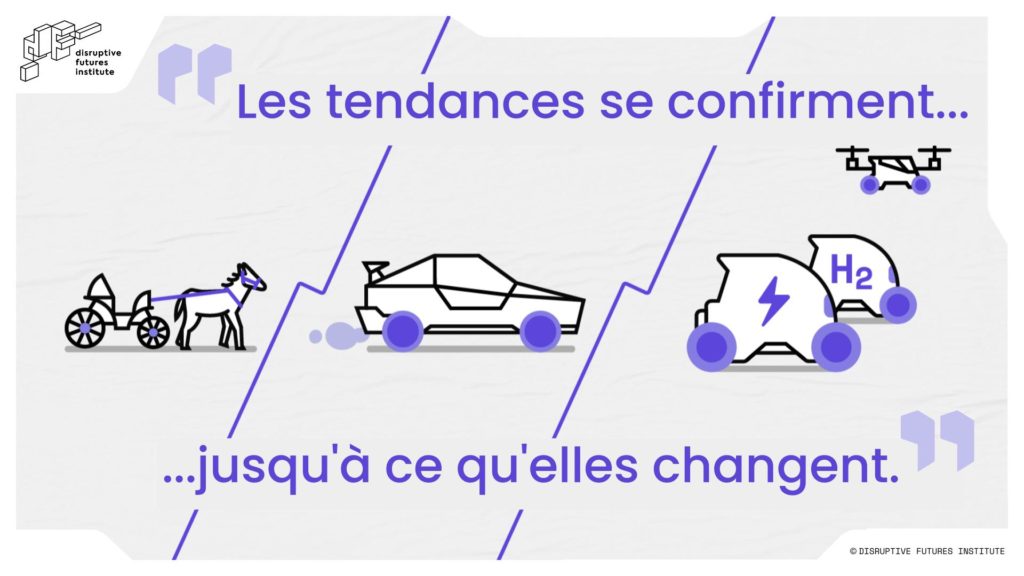
Fixed assumptions are like making a singular bet on a specific future, often to the exclusion of all else. An embedded bias in assumptions is taking for granted that the future will resemble the past. The danger lies in relying heavily on the completeness of what is known in relation to the assumptions made and the implications of those assumptions if they prove to be flawed.
Assumptions are not limited to businesses, governments, or decision-makers; everyone makes assumptions. The determining factor lies in how much we chose to rely on those assumptions and what else we decide to imagine beyond the assumptions themselves. The issue today is that the cost of relying on those incorrect assumptions is increasing.

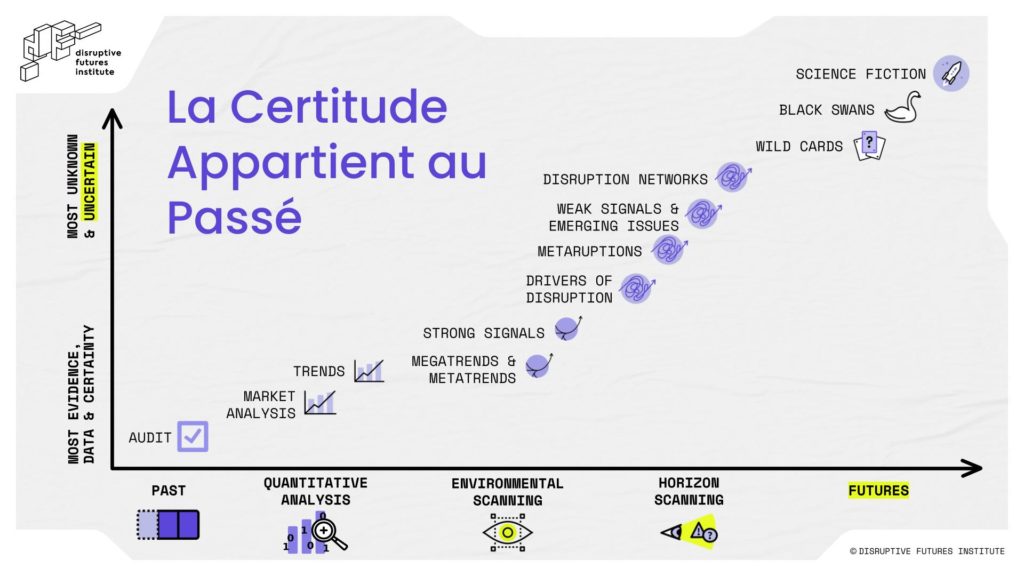
Relying on quantitative forecasts which extrapolate historic numbers into the future has implications.
Economic forecasts abound, but they did not protect the world from abruptly waking up in 2022 to the highest levels of inflation experienced for half a century. The mighty US Treasury ended up having to acknowledge its total lack of understanding of the impact of what it qualified as “unanticipated” shocks to the economy. Treasury Secretary Janet Yellen stated: « I think I was wrong then about the path that inflation would take… ».
Russia’s approach to invading Ukraine, and to a degree the expectations of the world, rested on a number of assumptions. According to CSIS, the first assumption was that Ukraine was deeply divided and would not provide a unified or effective response. Second, Zelensky was a weak leader. The third assumption was that the Russian armed forces were highly effective, and the fourth that Ukrainian forces were weak. Fifth, Russia assumed the US and NATO would be slow and limited in supplying weapons to Ukraine. These were not arbitrary assumptions; they were each based on analyzing available data points. If the past was a proxy for predicting the future, they could have transpired as correct assumptions.
The assumption that interdependence with Russia would produce stability, predictability, and even alignment determined Germany’s energy policy, military strategy, and defense budgets for decades. This assumption proved to be extremely expensive. In 2022, Germany found itself heavily reliant on Russian energy supplies and realized that for decades it determined its defense budgets and strategy based on assumptions of stability.
Relying on assumptions comes with a cost for countries, institutions, and corporates alike. In the corporate world, the assumptions which Blackberry, Blockbuster, Nokia et Palm (Pilot) made all sealed their future… to remain in the past.
When we try to pick out anything by itself, we find it hitched to everything else in the Universe.
John Muir
The Challenges of Assumptions
At its core, the clear challenges with assumptions can be traced to the word’s origin. From the Latin assumere, assumptions rely on feeling, perceptions, beliefs which are not substantiated. Unlike tested facts with empirical evidence (at least at a given point in time), assumptions are untested generalizations, based on theories and experience, and subject to cognitive and other self-serving biases. A specific plan, strategy, or policy is then built as a path to a discrete future which rests on this feeling or belief.
Assumptions are used for quantifying the main tenets of a strategic plan, typically for a two- to five-year time horizon. Taken in isolation, these forward-looking assumptions are unsubstantiated (based on the past) at best. At worst, such assumptions are outright incorrect, and their distorting effects compound as they interact. The further into the future the plan, the more significant the distortions develop over time.
Ultimately, under the veneer of data-driven assumptions, strategic planning can be arbitrary in our deeply uncertain world.
Hindsight Bias & Convictions
In hindsight, it is easy to believe that certain events were predictable. In making assumptions, the issue is not that what we assumed did not materialize; we inevitably make assumptions all the time, and no one knows the future. The true issues are:
- Unwavering certainty of fixed assumptions: Flawed assumptions often have in common absolute reliance on their accuracy. What is noteworthy is the firm belief of being correct. That certainty eliminates the questioning of explorable alternative futures.
- Building assumptions vs capacity building: Deep convictions may be a personal bias or simply overconfidence, but they result in accepting assertions instead of challenging them. Reliance on fixed assumptions can preclude any preparatory capacity building. Deep convictions, often unfounded, may result in laying foundations that cannot sustain major shocks or even small deviances. Gaps in capacity arise from not being agile enough to make sense of new patterns and emerge with novel paradigms adapted to the actual world – rather than to the assumed reality.
The degree of “wrongness” of any assumption would not matter so much if these beliefs were not relied on so heavily as a proxy for providing certainty of the future, to the exclusion of anything else.
The world’s consultants spend their time advising on restructuring, optimizing, finding every possible source of cost savings. At the same time, the greatest cost of all is ignored: the cost of assumptions.
The cost of relying on unchallenged assumptions is going through the roof.
Many of the perceived cost savings actually make these organizations more fragile (e.g. “optimizing” supply chains), which drive costs even higher over time. Think how much companies could save if they were more thoughtful about the assumptions they relied on. By holding on to wrong assumptions, this source of savings is completely ignored.
Reframe your assumptions about the world to access the greatest source of savings imaginable. Broadening and reimagining assumptions offers more effective cost savings than skimping on food subsidies, employee benefits, or post-it notes.