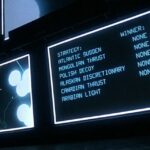


Unlike Hollywood, which has long promoted American cultural narratives and universal themes, the emergence of streaming platforms like Netflix, YouTube, or Stremio has led to worldwide access to regional storytelling styles, languages, and specificities. This shift has sparked an unprecedented cultural exchange, allowing people from one culture to view and understand another in previously limited ways.
But beyond entertainment, this evolution is an opportunity to rethink the future from multiple points of view. For decades, American culture has influenced people’s imagination, shaping collective visions and narrowing a sense of what is desirable. However, as science-fiction writer William Gibson once said, “The future is already here – it’s just not evenly distributed”. —In other words, the future emerges in fragments, shaped by local realities ready to collide with other cultures.
In this article, I reflect on how streaming platforms give unprecedented access to observe everyday life across cultures, which expands my ability to anticipate, explore, and think about the future. While watching movies, documentaries, vlogs, or series does not replace desk research or field studies, I argue that streaming platforms are powerful tools for cultural observations and foresight exercises. It can help question assumptions and enrich our collective imagination of what’s to come.
Sometimes, the most profound realizations arise from the simplest moments—those everyday gestures we repeat without thinking, which hold deeper meanings. Recently, during a conversation about films with a friend, he suggested Perfect Days, a co-production between Japan and Germany that follows the routine life of Hirayama (Kōji Yakusho), a public toilet cleaner in Tokyo. I added it to my endless list of movies “to watch” without much consideration.
the future emerges in fragments, shaped by local realities ready to collide with other cultures
Days later, I decided to watch it on Stremio. What started as a casual viewing session turned into something much more meaningful. In a seemingly ordinary moment, the camera follows Hirayama as he climbs out of his van, adjusts his tool belt, takes his bucket and mop, and begins cleaning Tokyo’s public restrooms. A simple, almost mechanical act, but performed with precision and intention that made me stop. I paused the film and captured the image as if something was essential in this gesture beyond the screen.

The mundane as a lens
What captured my attention was the action itself and what it represented: the repetition of everyday gestures, the connection with everyday objects, and how routine shapes lives. Perfect Days is not just the story of a Japanese man and his work but a study of the significance of the mundane and its role in creating meaning.
This mundanity manifests itself on several levels:
- The universality of experience. Millions of people worldwide share Hirayama rituals. Cleaning public spaces, using certain tools, and repeating certain gestures reinforce a collective cultural identity.
- The automaticity of the practice. How he adjusts his tool belt, fills the bucket with water, and moves his mop precisely reflects the actions of someone who has internalized his work to the extent that it becomes an extension of himself.
- Deep cultural meaning. A bucket, an analog clock, a music cassette, a public bench—each object transcends its immediate practical function and becomes a symbol linking the present with the past, personal history, and wider cultural values.
Re-imagining everyday objects as diegetic artifacts
The mundanity presented in Perfect Days serves as an ideal case study to inspire future thinking.
The main character, Hirayama, lives a simple, routine life cleaning public toilets in Tokyo.
At first glance, his world seems unremarkable. However, the tools he uses, his habits, and his interactions with the spaces around him can be reinterpreted as Diegetic Artifacts: objects that tell a deeper story about his values, worldview, and relationship with the city.


Let’s break this down with some examples. Imagine watching Hirayama in action, cleaning a public toilet.
1. The bucket as a cleansing ritual
One of the most striking aspects of Perfect Days is how the cleaning bucket becomes more than just a tool in Hirayama’s hands. In Japanese culture, seiri (orderliness) and seiketsu (cleanliness) are deeply valued, and Shinto traditions regard purification as sacred. Could cleaning, often dismissed as mere labor, be a form of quiet devotion? For Hirayama, each bucket of water represents more than maintenance—it is a ritual of care and renewal, a practice that transforms routine work into an act of respect for shared spaces.
Diegetic Insight:
The bucket is a ritualistic vessel that links personal discipline with collective harmony. It symbolizes how Japanese values elevate maintenance work into an essential, dignified act of service, sustaining the unseen rhythms of urban life.

2. The analog watch as an anchor of healthy routines
One thing that struck me as I watched Hirayama was how his old analog watch remains a part of his daily life. Burnout in Japan is a serious and systemic issue. Can wearing an analog watch become a self-care ritual? This watch might mark the intervals he has learned to respect to maintain his well-being. Unlike smartwatches, each glance at the watch is a pause, an invitation to breathe and reconnect with the present moment.
Diegetic Insight:
The watch focuses on conscious time structuring by creating deliberate pauses in the daily routine. It is an object that invites Hirayama to remain present and balanced during his routine.
3. The portable bench for moments of reflection
In several scenes in Perfect Days, we see Hirayama taking short breaks on public benches after cleaning toilets. Here, the bench becomes a personal space for rest and reflection. In very dense urban environments like Tokyo, public toilet cleaners like Hirayama might soon need to carry a portable folding bench to create a small haven of rest in the middle of their day. This object reflects the importance of caring for one’s mental and physical well-being in a job that is often lonely and demanding.
Diegetic Insight:
The portable bench creates physical spaces of respite during the workday, integrating moments of self-care into strenuous work. Unlike the clock, which serves as a personal reminder to stop, the bench turns these moments into a tangible refuge, offering physical and emotional respite from the urban bustle.
How to practice observation?
Inspired by The Manual of Design Fiction and Nicolas Nova’s Exercises d’observation, I have developed my own Diegetic Discovery Kit: a practical method for exploring and reimagining everyday objects as seen on screen or around me. You don’t need to be an anthropologist or design expert to get started; you only need curiosity and a willingness to question what you consider ‘normal.’
1. Observe the environment
Begin by choosing a space to focus on and then cataloging the objects and elements you encounter. Or as French novelist and filmmaker Georges Perec would say: “Question your tea spoons”. Then imagine: What if one of these elements served a different purpose in my culture?
2. Question the familiar
Choose an everyday object and bring it to your culture. How would this object change if social, technological, or environmental conditions differed? For example, imagine your fridge working without electricity due to a prolonged power cut. How would its design change to adapt?
3. Role-play an alternative future
Imagine a day in your life 5–10 years from now in a world where something significant has changed (such as extreme climate conditions or new social norms). What new tools or devices might emerge? How would routines change?
4. Create your diegetic artifact
Choose one of the scenarios you’ve imagined and design an object that would exist in that world. This could be a quick sketch, a simple prototype, or even a short story explaining how this object affects people’s lives.

Conclusions
Tools like the Diegetic Discovery Kit aren’t solely focused on crafting bizarre or dystopian futures. They’re about creating a space for critical imagination, encouraging me to step back and consider how I might design a better world with the observations of another culture.
This reflection assumes an added dimension when considering the intersection of culturally diverse futures. The very act of writing this article exemplifies this idea: an Argentinian observer sitting in his apartment in Madrid analyzing a Japanese film about everyday urban life in Tokyo. These cultural layers—my Argentinian background, my current Spanish context, and the Japanese setting of the film—each contribute a different interpretation of mundane objects and daily rituals. They are sources of inspiration for imagining possible futures.
Watching “Perfect Days » helped me uncover my cultural biases. In addition, examining Hirayama’s everyday life from an Argentinian-European perspective opens up new interpretations and possibilities that may not be apparent from a single cultural viewpoint.
This blend of perspectives reminds me that even the most ordinary objects can hold intricate stories when we truly pay attention. At its core, being human is about finding meaning in daily life’s small, repeated rituals. This idea resonates with Nick Foster’s concept of The Future Mundane, which suggests that grand technological upheavals won’t shape the future, but the quiet, steady evolution of everyday objects and routines will.
The most meaningful innovations, then, aren’t those that disrupt our lives but those that effortlessly weave into our cultural fabric, enriching our human experience in ways we hardly notice.
grand technological upheavals won’t shape the future, but the quiet, steady evolution of everyday objects and routines will
I believe the future is shaped not by a single vision but by the intersection of diverse perspectives that allow the many to see, understand, and re-imagine the world. Each culture’s unique qualities and biases contribute to a richer and more complex mosaic of potential futures.
Do you dare to question your environment with an alternative lens?
This text is an adaptation and expansion of the original article, Diegetic Discovery Kit. The current version incorporates new reflections on cultural intersection based on Futurs Croisés.
Thanks to Fabien Girardin and Rohit Gupta for our regular conversations on the topic. If you are interested in exploring the genesis of these ideas, you can reach me any time!
Happy imagining!
Et vous, qu’en pensez-vous ?
N’hésitez pas à :
1. partager votre avis ?
2. nous laisser un petit mot ?
3. rédiger un billet ?