Q132 · How to make a foresight program visible?

11 novembre 2022
4 mins de lecture

In this series « deftech – behind the scenes », we propose to tell the story of the programme deftech as faithfully as possible; its choices, its challenges and above all the lessons learned.

One of the first question you will receive working in technology foresight is something similar to «which disruptive technologies are you looking at?». We will not discuss here what disruptive means or what is exactly a technology with respect to a system, a process or an application, but that you like it or not, you will be confronted to it sooner or later for the sake of consistency. What you can learn out of this question is that people are waiting for you to inform them about technologies. Slightly less obvious is that this question will quickly translate for you into two challenges:

  1. What content are my stakeholders expecting?
  2. How can these different stakeholders be informed of the results?

It would be lying pretending we have a recipe but here is what we did to start the program rolling, including the motivation behind it.

1. Leverage the «not invented here»

Instead of rejecting the not invented here, embrace it!

It would be almost impossible that you would be the only person trying to answer to such question. Especially at government level, almost every country, in one form or the other is doing technology foresight for defence and releasing insightful documents, often in the form of white papers. Is a list of technologies considered by a country really different than the one for yours?

Don’t stop to the defence sector, but move to the other departments, to the industry, to other industries, to international organizations, academy, etc. Very quickly you should have an overview of which technologies matter. This is also called knowing the state of the art in the field in question, a preliminary step to any research work! 

2. Keep it open : together we are stronger !

Even if defence normally means secrecy, consider if this does really apply to what you are doing and if you would not have more to win to share and interact. This is a decision you will have to take. For Deftech, the vision is Anticipate disruptive technologies through synergies.

Of course, everything is not shared and it would be naïve to imagine that from every entity, but like in cooking, it is not really the ingredients that is the sensitive information, but the proportions and how you mix them. The same applies for technologies.

3. Make the invisible, visible !

It is time now to let some magic happen! All these technologies can be really well summarized on a nice Excel sheet. The attractiveness of going through such a document, as powerful as the functionalities could be, is close to zero. But find an attractive, dynamic, collaborative and colorful way of presenting that very same information, and people will start looking at it. Not only that, they will start talking and thinking about it.

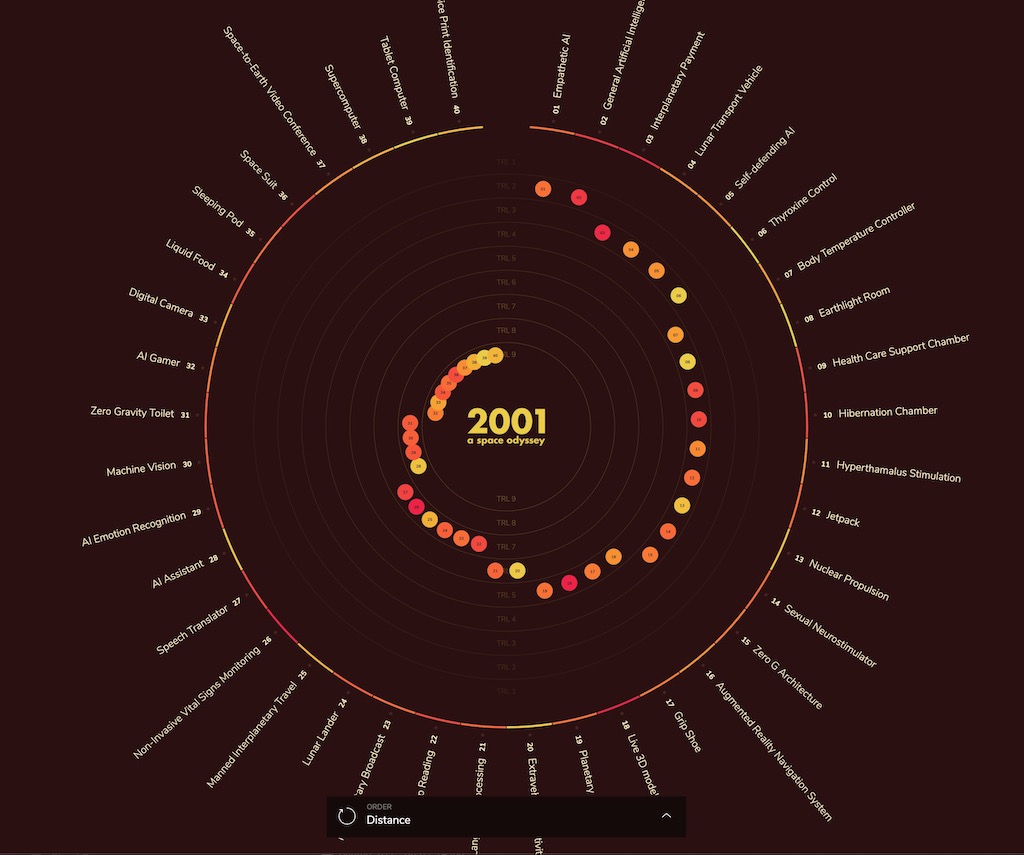
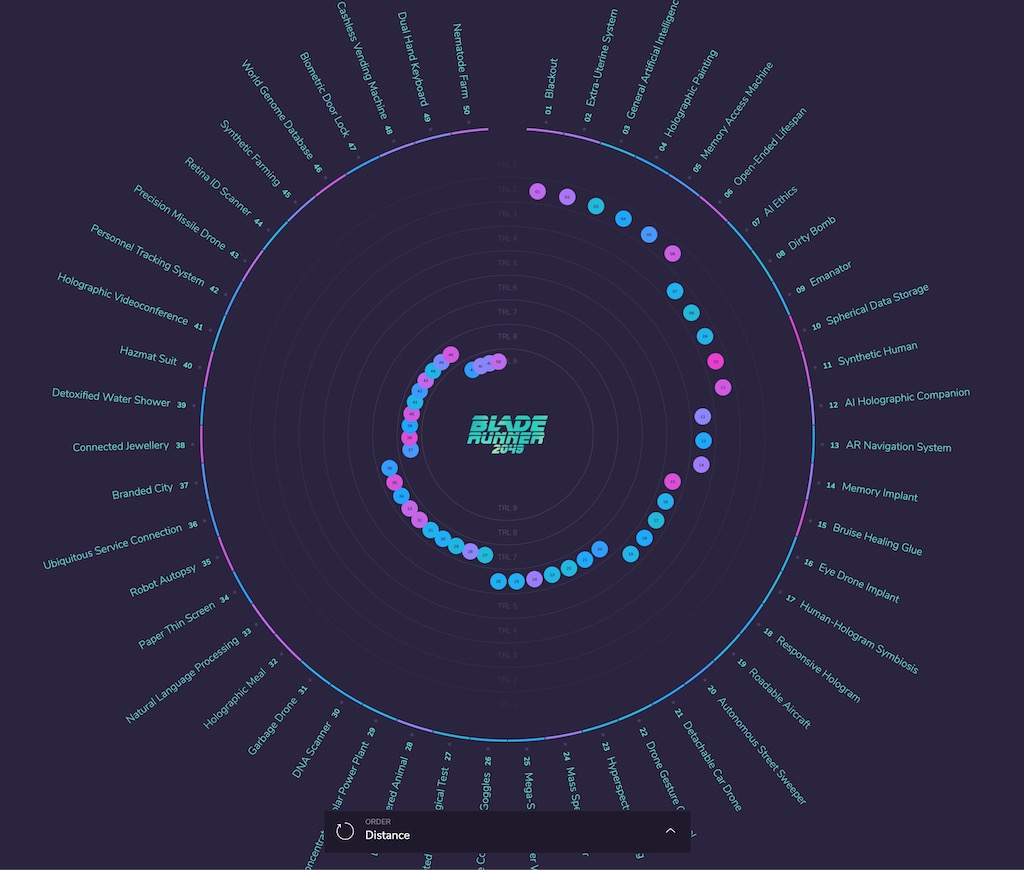
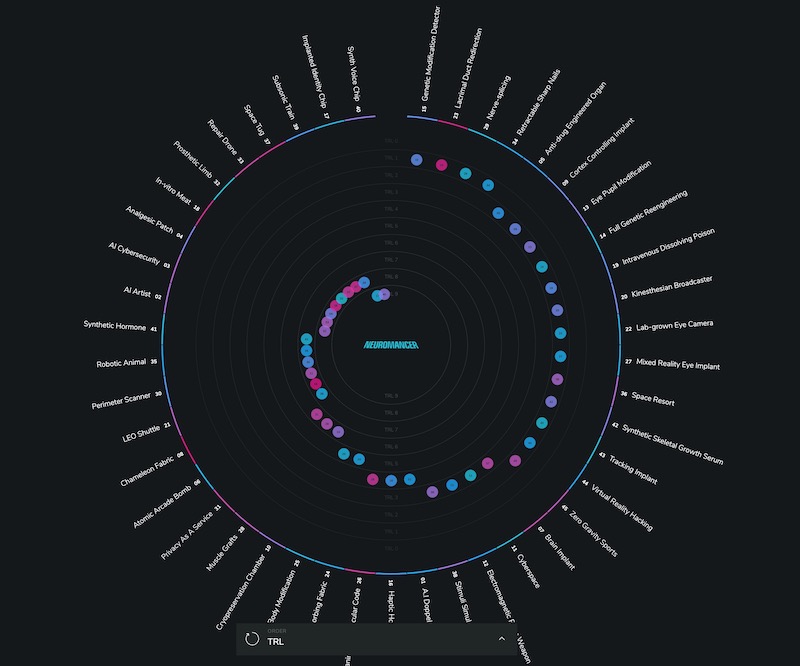
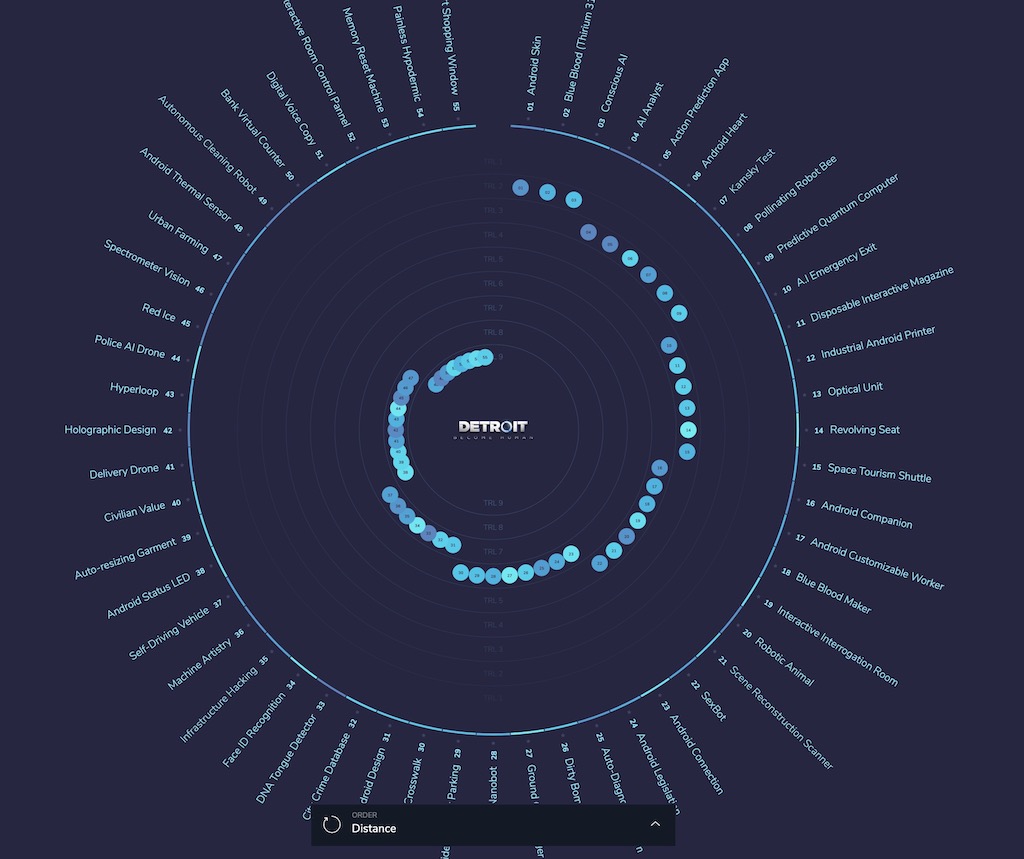
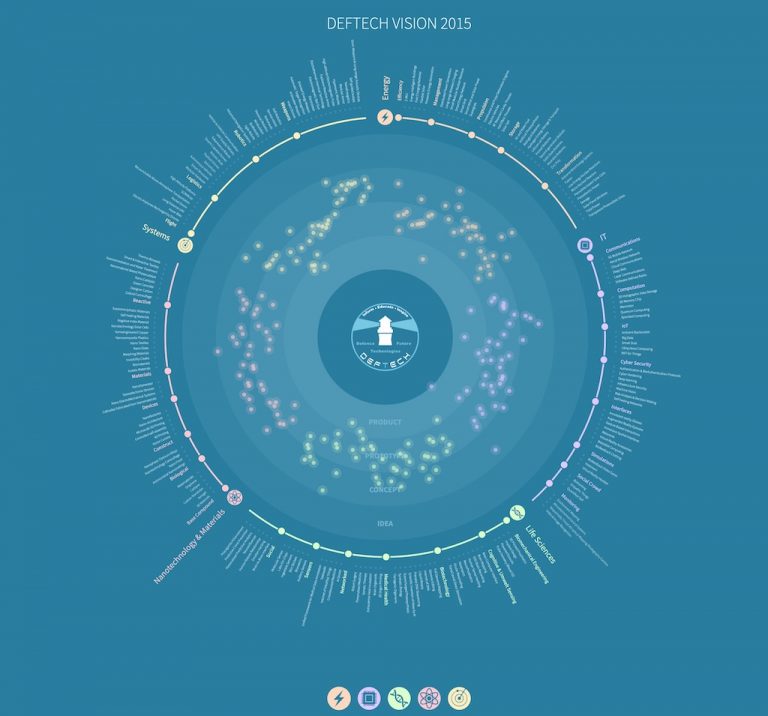
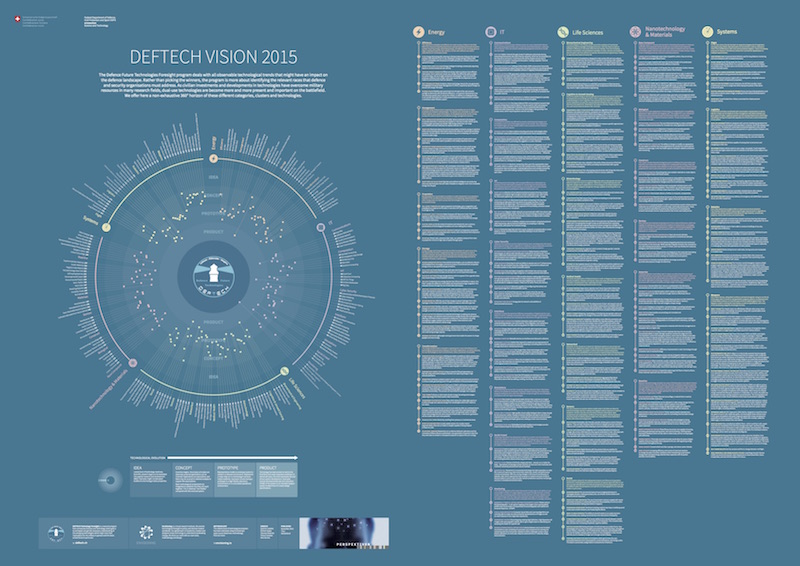
For deftech, this step was very important as it resulted the first product visible from the outside. It was an artistic representation of 202 elements available both as A0 poster and in digital format. We printed it and put it over the different coffee machines, the best places to get people’s attention!

Example of the first visual representation of technologies (2015), an alternative to the Excel sheet, created by envisioning.io to better illustrate the maturity level of the elements as well as their potential interactions.
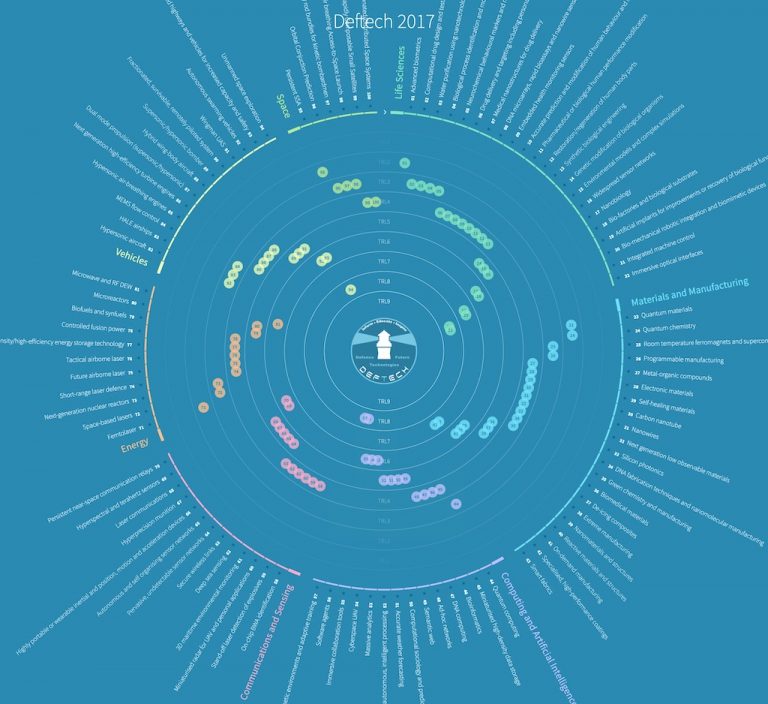
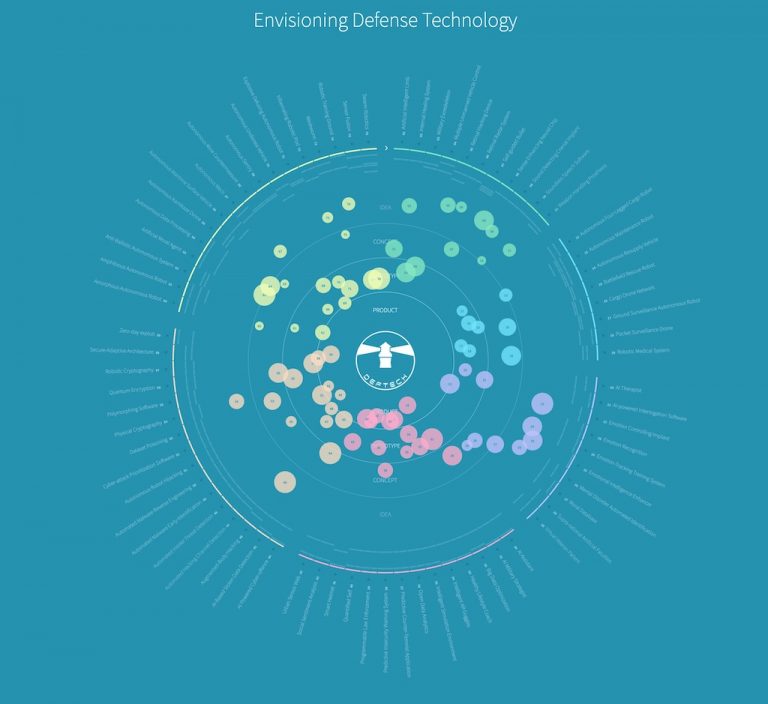
Initially conceived as a static image, the radars have become fully dynamic and integrated into a collaborative digital platform dedicated to technologies.

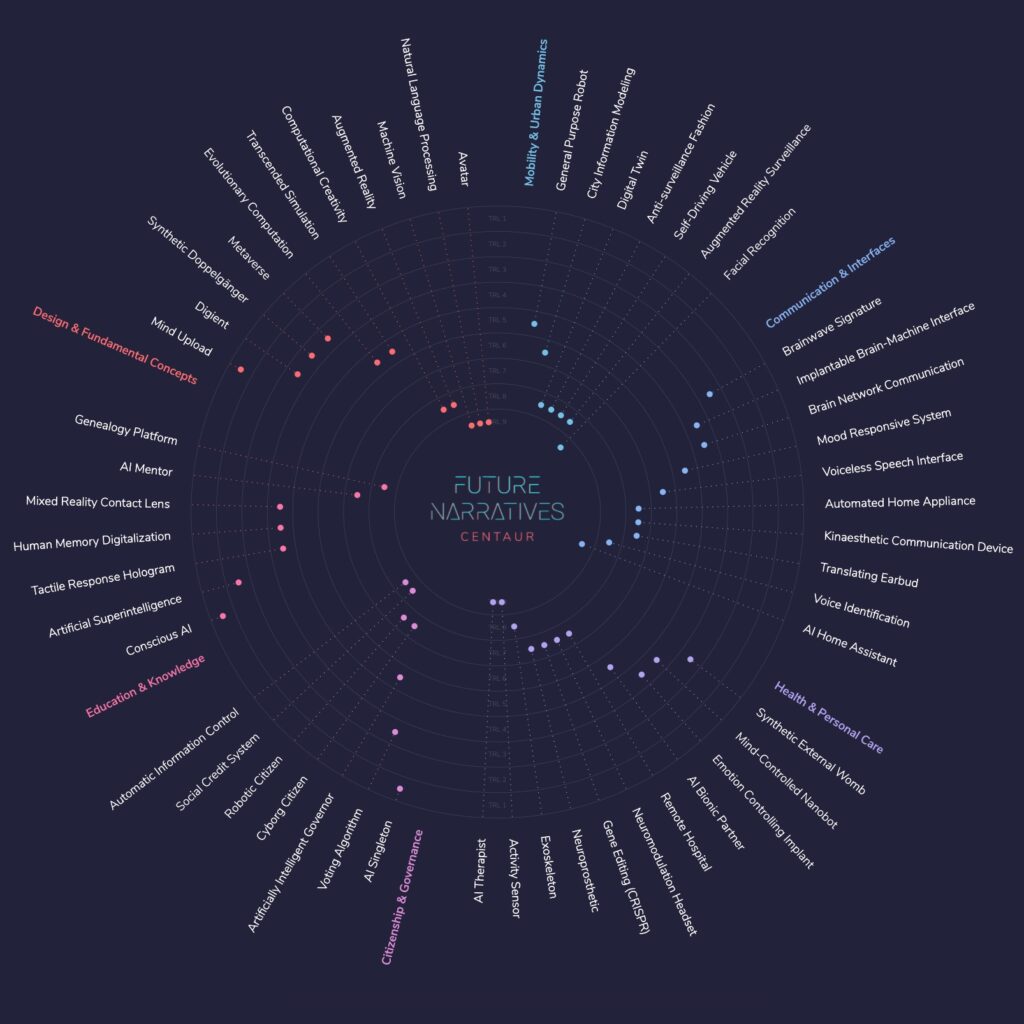
Radars realised by Envisioning

Supply Chain and Logistics
Human-Machine Interactions
2001 Space Odyssey
Blade Runner 2048
The Neuromancer
Detroit: Become Human
Deftech 360°
Robotics & AI
Overview

4. Take time, write, share

Having a nice dynamic representation of various technologies is definitely a step forward, but you could still add some value by explaining why are these technologies relevant and what is your thinking behind it. Support your work with publications. From articles in specialized military reviews, via internal reports, to self-published documents, newsletters and blog, all means are good to inform your stakeholders about your findings and about your different activities.

Here as well, try to be creative. There is nothing more boring and less appealing to read than a thick report with plain text and very little illustrations. You can have the best content, if nobody is reading it, it is not worth the efforts. From collaborative publications to comics, we tried different formats, each one with a precise intention in mind.

The only conclusion that we can draw from the feedbacks we got is that you’ll have to stand for your ideas, as no format will have only supporters or detractors. Acceptance can also come with time, and surprisingly enough, some publication can have a delayed success as the format has gain in popularity or was used (and therefore validated) by some other entities considered as “reference” by some people with influence.

5. Make it accessible : establish your online presence

Together with the identity comes the digital identity and Internet presence. If this might not seem important at the beginning, you will realize soon enough, that it would be nice to make your different products visible and accessible. Being online allows you to create a community to which you can provide selected information at a given interval in the form of newsletters.

It is important to stay in the mind of people, especially if you are working on yearly projects. You cannot normally afford to simply disappear for 11 months!

Challenges and lessons learned

  1. Never compromise on the quality of the products you are releasing. Quality of the content, as well as of the form. Not everybody might agree or like what you are doing, this is subjective. Quality, more objective, will help you build respect and trust along the way.

  2. If you start a newsletter or activities with a certain frequency, make sure that you have the resources do to it at least during a year. There is nothing more undermining trust than starting such activity and stopping it after one or two iterations. Modify the format, the content, the length but keep it rolling!

  3. If having an Internet presence is almost a given, think it twice before moving to the social media. Doing it would really add something to your dispositive? Is the rhythm of your outputs compatible with the required update-rate of the posts necessary to be visible on the social media?

  4. It takes time to grow, there is no shortcut, especially when building a professional community of interest. It might be sometimes frustrating compared to other commercial environments, but this is simply the way it is. Deal with it.

  5. You might face administrative challenges with respect to some of your initiatives. If this is the case, adapt, don’t resign. The content of the message is far more important than how you deliver it. Paris is well worth a mass, no?

Laisser un commentaire

Your email address will not be published.

Ce site utilise Akismet pour réduire les indésirables. Découvrez comment les données de vos commentaires sont traitées.

Article précédent

Q132 · Comment rendre visible un dispositif de prospective ?

Article suivant

#19 Gaya Herrington · Limiting Growth

Ne manquez pas

Q357 · Existe-t-il une prospective mexicaine ?

Existe-t-il une prospective mexicaine ? C’est une

Q357 · ¿Existe una prospectiva mexicana?

¿Existe una prospectiva mexicana? Es una pregunta
La première image de distribution collective de la potion dans le premier album, « Astérix le Gaulois » (1961).

Q349 · Le futur n’a pas signé votre business plan

L’ingénieur aime résoudre des problèmes, quand bien